Should Sam Altman Represent You at a Permitting Meeting?
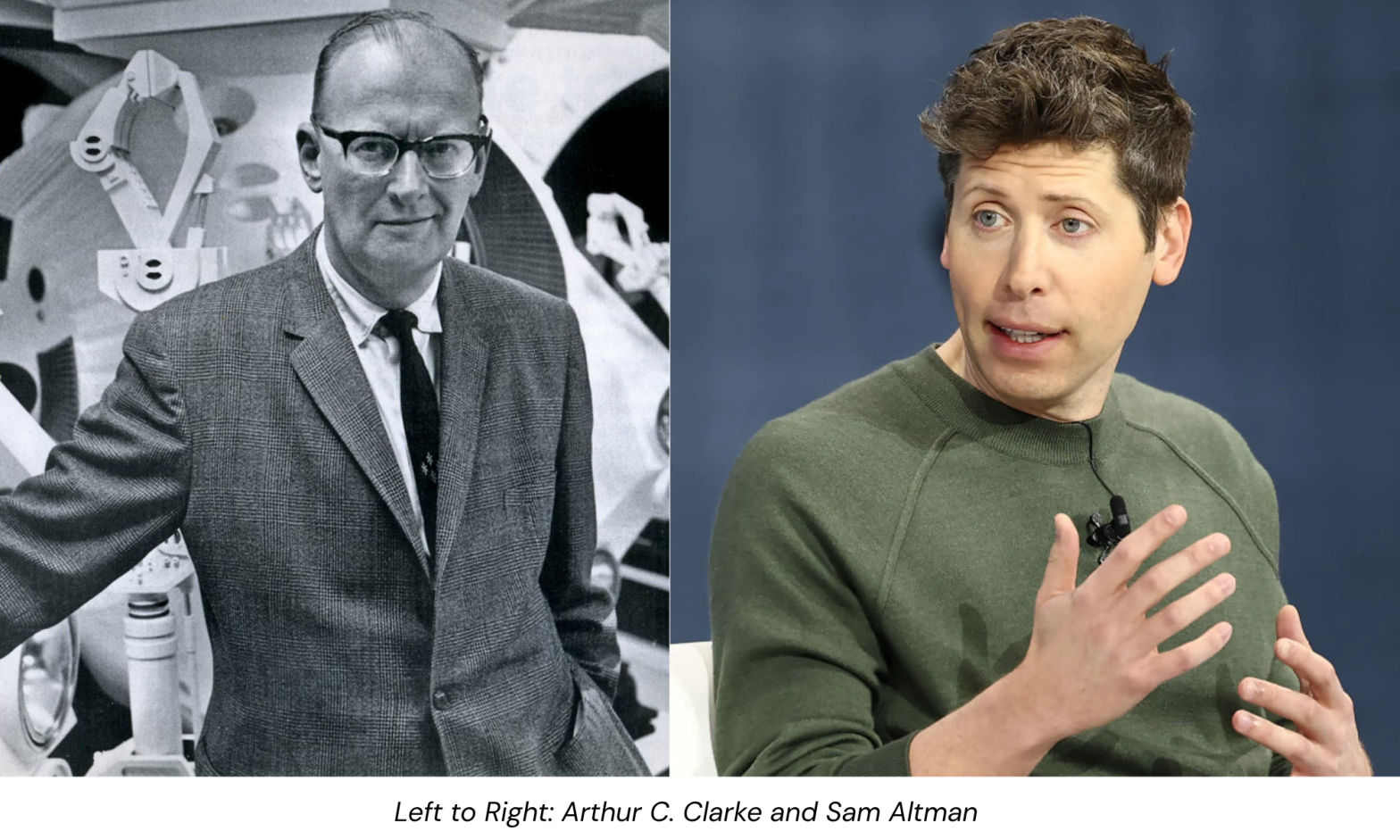
This month I went to Climate Week Boston, where a dominant topic was permitting reform – which is shaping up to be a key priority for the Senate, with the SPEED Act and other bipartisan proposals on the table aimed at unlocking grid capacity and building clean energy projects, along with more data centers. While the debate over data center resource consumption will likely intensify if it becomes easier to build them, increased clean energy deployment would be something to celebrate.
Regardless of how much “reform” actually gets done, there will always be pushback from local communities who want to protect their own ways of life, their heritages and their resources, no matter what is being built. They’ll want to be sure their utility bills won’t shoot through the roof, that the wildfire risk is not exacerbated, and that their wells won’t run dry. And if they can’t trust the messengers who show up to make the case, no slide show with pie charts is ever going to win them over.
So I thought it would be fun and instructive to compare two messengers with bold thoughts for the future, but with very different styles, and ask you to consider who should be representing you at an important planning meeting.
The first is OpenAI founder Sam Altman. At the India AI Impact Summit in February 2026, when asked about AI’s energy and water footprint, Altman called the comparison “unfair” and argued that critics were calculating it wrong. To be fair about it, he said, you’d have to factor in the “20 years of life and all of the food you eat during that time before you get smart” required to train and grow a human.
Rather than engaging authentically with the question, Altman reframes the concern as an error on the questioner’s part. He calls the water claims “totally fake” and “completely untrue.” His approach is corrective and even exasperated. While he ultimately acknowledges that total energy consumption is real and that we need to move toward nuclear, wind, and solar, the lead message is that you, the worried person, are worrying erroneously.
Next is science fiction writer Arthur C. Clarke. Appearing on the BBC in September 1964, Clarke is asked to predict the future. He opens by telling the audience that predicting the future is a discouraging and hazardous occupation, that anyone reasonable will sound conservative in 30 years, and anyone right will sound insane. He laughs at his own position before anyone else can. Then he gets to the substance — communications satellites, remote work, computers that will eventually outthink their makers — and presents the last of those not as a threat or a triumph but as something worth considering with curiosity.
Clarke invites the audience into the question rather than scolding them for asking it. He’s making a related argument to Altman’s — that powerful new machines are coming, that they will consume resources, that they may help us in ways we can’t yet picture — but he treats his listener as a thinking adult harboring legitimate doubts, rather than as an obstacle and a nuisance.
Both speakers are getting at a defensible idea: that the technology in question might be worth the trade-offs. The difference is in how they’re saying it (and who you’d find convincing as a result). Clarke’s humility is doing the persuasive work. He gives ground before he asks for any. On the other hand, Altman gives no ground, asks for everything – and he whines.
The companies building the renewables, storage, and transmission we know we need to deploy at scale are facing a version of this same challenge — not whether their technology works, but how they make the case for it at the next planning meeting.
To be clear, I’m not arguing here for or against data centers, nor suggesting that AI will save us from the climate crisis, but I would like to suggest that AI does have potential to help model, predict, and manage our climate problems, despite the fact that such an approach would clearly involve resource demands that should be understood in advance of any deployment, and that we have not yet built the public conversation that can hold both of those truths at once.
Conventional communications wisdom tells us to “meet people where they are.”
Easier said than done. What does that actually take? How do you avoid pandering? How do you stay honest enough that the people you’re talking to feel like you actually see them, rather than feeling handled, so that you really demonstrate concern for whatever economic pain and environmental hardships they fear your technology could exacerbate because of something they read online or that they truly feel in their own lives?
Our best chance to gain widespread acceptance for clean energy deployment at scale, along with any sustainable data centers that can help in the process, is by making honest cases to people who have legitimate reasons to be skeptical or scared, doing the homework on what a project actually costs the community hosting it — not only with the numbers, which is the easy part – but on a more visceral emotional level. It means tolerating unexpected or undesirable answers and then showing humility and genuine respect for your audience, their families, and the places they call home.
There will always be large companies armed with lawyers and lobbyists determined to steamroll local concerns to get what they want, so it’s worth remembering that being ready to make some noise at planning meetings is the best defense against such shenanigans. But for those well-intentioned companies who are committed to addressing our climate challenges, emulating Clarke’s humility and emotional intelligence is more likely to build the trust required for community acceptance and cooperation, as opposed to Altman’s hubris and arrogance, which has no place in a proper energy transition.