Must “He” Actually Be Named?
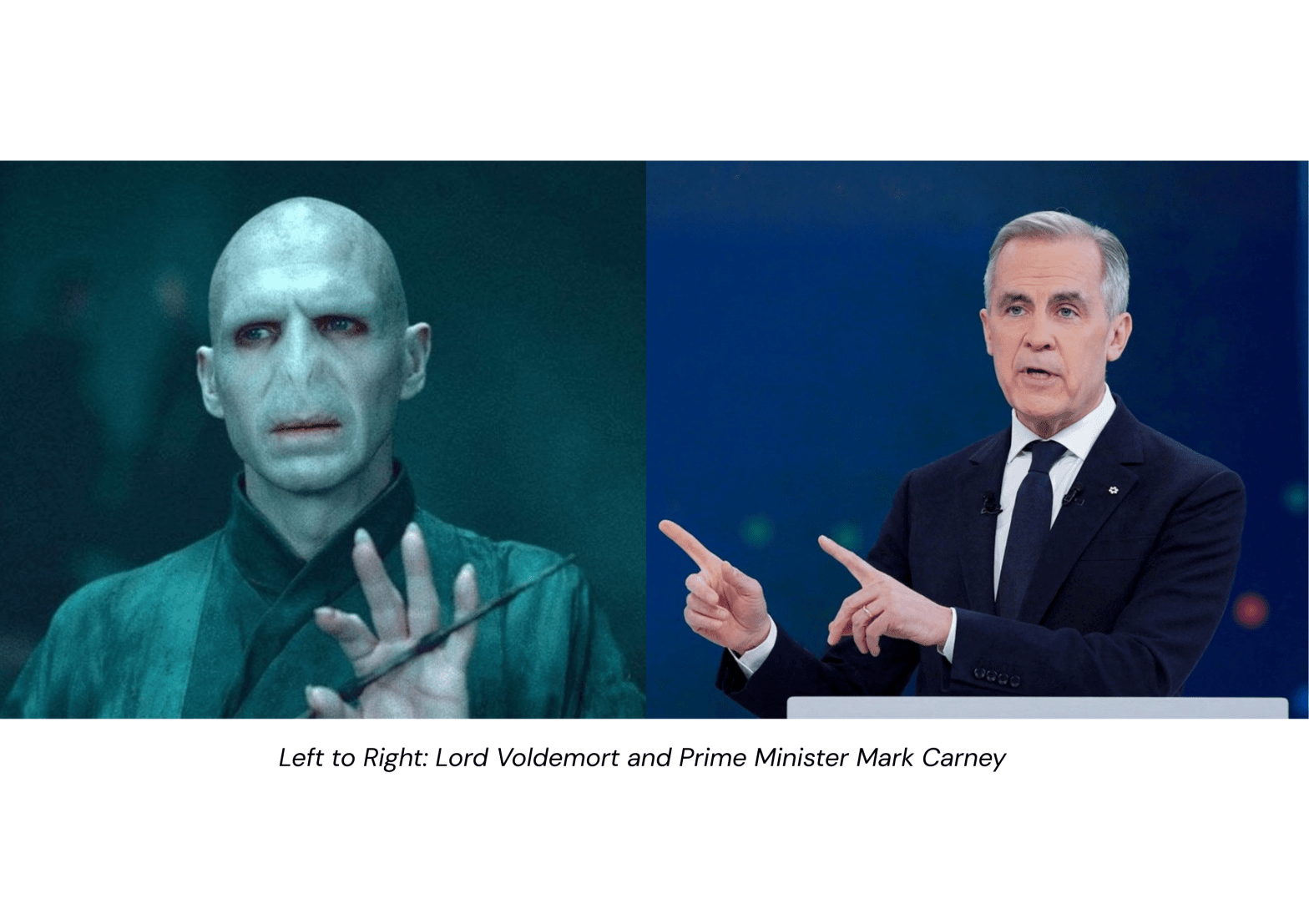
In the Harry Potter series, most wizards refuse to say Voldemort’s name (referring to him instead as He-Who-Must-Not-Be-Named or You-Know-Who) out of fear that doing so will make things worse. Meanwhile, Harry Potter himself calls Voldemort by his name because he won’t let fear control how he talks about the problem.
Right now, we are watching a similar dilemma play out on the world stage, as global leaders and politicians wrestle with whether or not to name Donald Trump when addressing the problems his pronouncements and policies create.
I first started thinking about this last June when I attended the European Union Sustainable Energy Week conference in Brussels, where a range of commissioners and other officials discussed renewables, energy security, and navigating political uncertainty with, as they vaguely phrased it, “our friends across the Atlantic.” The fear and excessive caution in the room was palpable, and underscored by the fact that the speakers never dared to mention Trump’s name.
Fast forward to this month at Davos, when Canadian Prime Minister Mark Carney condemned “great powers” for using economic coercion and talked about countries that abandon “even the pretense of rules and values for the unhindered pursuit of their power and interests.” Like the speeches from EU Sustainable Energy Week, Carney’s talk opted not to directly address Trump, yet Carney’s directness and bravery earned him a standing ovation and galvanized other leaders in the room.
Everyone knew he was talking directly about Trump without ever having to say his name.
In this case, addressing Trump directly would probably have resulted in a Truth Social posting spree that distracted from some of the attention Carney directed towards his prescribed solution to the chaos Trump is currently sowing globally: that “the middle powers must act together.” Carney knew how important it was for Canada to be heard in this moment, and his bold offering contrasted with the Brussels gathering from June, where the anti-climactic takeaway was a quiet hope that everything would return to normal if we just kept playing nice with “our friends on the other side of the Atlantic.”
Contrast both these approaches with Danish Member of European Parliament Anders Vistisen, who curiously took a different tack altogether during a recent debate about Trump’s ploy to “take” Greenland: “Let me put this in words you might understand. Mr. President, fuck off.” While Vistisen’s reasons for laying out his point so viscerally haven’t been made public, it’s not far-fetched to assume that the extreme nature of Trump’s antagonism toward Greenland left him feeling like he had no other choice but to vocalize frustration.
This brings us back to the original comparison. While the books might treat Harry’s use of Voldemort’s name as the “right” choice (an act of courage and virtue that neatly pays off in the end), real-world communication is nowhere near as morally clear-cut as a work of fiction, and deciding whether or not to mention Trump when referencing the impact of his policies is not really a question of being “right” or “wrong.”
Rather, it’s a matter of what you’re trying to accomplish and whether dragging his name into the conversation will help or hurt those goals.
If you’re wrestling with this decision for your own organization, start by asking:
- To what degree does assigning blame matter here?
- To what degree is your audience going to reward you or punish you?
- What is the degree of courage/caution/fear that is the right calibration for you?
- Does naming names distract from or add to the power of your message?
These questions don’t have easy answers, and they shouldn’t. The organizations I’ve worked with have handled this by pulling in different stakeholders for rigorous debate. They look at the question from multiple angles: what different audience segments will hear, what past examples show about how these decisions play out, what they’re willing to trade to achieve their goals.
Rather than making a choice purely based on feeling or fear, they commit to acknowledging that this decision is complicated and there’s no one “right” answer. Some organizations will say the name. Some won’t. Both sides will have good reasons.
As for me, I still don’t have a defined answer for my own work. I’m using Trump’s name right here and now because it’s needed to help clearly and honestly communicate to you what it takes to survive these strange and complicated times. But I don’t always make that choice.
Whatever choice you make – to say the name or avoid it – the work is in understanding why you’re making it. Sometimes the bully does need to be confronted directly. Other times, saying the name is a distraction that can impede your objectives. (Sometimes giving the middle finger just makes you feel better, but brandish it at your own risk.) But in my mind, as long as you’ve asked those questions, debated them honestly, and come to your decision from a place that is grounded, you’re on the right track.